
All News
-
Four Reasons Why the Internet of Things Needs NFC?
Energy savings. Better health and fitness tracking. Greater convenience. Improved security. The Internet of Things is already providing these and other major benefits to early-adopting consumers who have invested in connected security systems, thermostats, lighting, wearables, and appliances. And there’s much more to come; according toJuniper Research, there will be 38.5 billion connected devices by 2020.
But for consumers to benefit fully from the Internet of Things, they will require some additional help. It can be challenging to enable a network connection for a device with no user interface. With no interface, connected objects have no way of knowing a user’s intent. Security on an open network is another concern. And then there’s the biggest challenge of all — bringing the Internet of Things to all the unpowered objects that lack an Internet connection.
That’s where NFC comes in. NFC provides four key capabilities that make the Internet of Things more convenient, more secure, and more inclusive:
1.Easy network access and data sharing– With NFC, the process of connecting devices is easy and intuitive. There’s no lengthy handshaking or data entry requirements. Just tap and you’re connected to a world of convenience, information, and enhanced experiences.
2.User control with expressed intent– NFC offers a simple, intuitive means of indicating the user’s intent to initiate action. It puts users in control by enabling them to connect on their terms and when they choose. A quick tap makes it clear.
3.Data security at multiple levels— Wide-open networks allow opportunities for hackers. NFC counters with built-in features that limit opportunities for eavesdropping, and easy-to-deploy options for additional protections to match each use case.
4.The ability to connect the unconnected— NFC solves the problem of unpowered objects that lack network access. By embedding NFC tags in these objects, you can add intelligence anywhere. With a tap of an NFC-enabled device, it can open a URL and deliver content that enhances the customer experience.
Those capabilities will come in handy. According toNavigant Research, Global revenue from shipments of residential IoT devices is expected to top US$330 billion from 2015 to 2025. So, whether you market devices, appliances, or services to your customers, look for NFC to enhance their experience and help you differentiate your offerings.By rooneyFour Reasons Why the Internet of Things Needs NFC?more -
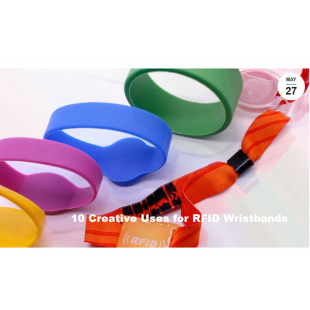
10 Creative Uses for RFID Wristbands
We are all familiar with RFID Wristbands being used to identify visitors at any type of event or attraction. Wearing one of these bands will signify that you have entered the site legally and are not attempting to avoid an entrance fee. Built in security features also prevent the bands from being transferred and illegally reused.
However, in nearly 21 years of selling wristbands we have learnt that there are many more uses for a RFID wristband than just Visitor ID. If you consider that both these types of band are just a simple form of media to display print, it opens up a large number of alternative uses, both indoors and outdoors. Here are just some of the different uses that we have come across which just go to show what a useful and versatile product our wristbands are.
Whelping Bands
If you have ever had a litter of puppies you will know how difficult it is to identify each one as they all look the same! A RFID wristband can be safely placed around the neck. This enables you to keep track of who is who, record feed and weight details and ensure the right puppy goes to the right home. You can help identify the boys and the girls with either blue or pink bands!
In the Garden
A RFID band is long lasting and can be written on. Therefore, they are a perfect and inexpensive plant tag. Each year I sell a small number of Christmas Trees where the buyer can choose their own and collect later. I label each one with a Neon Yellow Tyvek band which makes them highly visible and then write the name and price as each one is sold.
Suitcase ID
Have you ever noticed how many suitcases all look the same as they go around the airport baggage carousel? Most of us have inadvertently picked up the wrong bag at some time or another. By attaching a brightly coloured Tyvek or Vinyl band to your bag will clearly identify it as “yours” and hopefully ensure you take the right bag home with you!
Runner ID
Whether you are running a gentle 5k or a more energetic Marathon or even Triathlon you want to ensure that you are quickly reunited with your bag of belongings at the end of the event. RFID wristbands can be printed with a large sequential number. By issuing each runner with a pair of wristbands with matching numbers, one band is attached to the wrist and the other band to the bag. The numbers can then be matched and the correct bag collected.
Child ID
We love taking our children to a busy event or the beach. However, every parents’ nightmare is the thought of their child wandering off and becoming separated. In the event that this does happen we want to ensure that they are reunited as quickly as possible. A RFID wristband is both waterproof and durable. Ensuring your child wears a band with a mobile or emergency number written on it will give you peace of mind that they are safe.
Hospital Cleaning
Infection control in a hospital is a primary issue and providing a clear audit trail to show regular equipment cleaning is vital. Tyvek bands are widely used by many NHS Trusts to label equipment to identify daily, weekly or monthly cleaning. A date and signature can be written on each band for record purposes.
Product ID
RFID bands have sufficient space to print quite detailed product descriptions or instructions. They can be easily attached to almost anything and provide an alternative to a label which may prove more difficult to apply or display.
Alzheimer’s Band
Sadly, many people suffering from Alzheimer’s or with Learning Difficulties run the risk of wandering off into the community and become lost or confused. As they carry no form of ID the police spend many hours trying to reunite these people with their families or care homes. A RFID wristband can be comfortably worn for several days and they can be printed with the name of the wearer and a contact telephone number. It’s an inexpensive and easy way to help protect these vulnerable people.
Ticket Alternative
Why not issue a wristband instead of a ticket? It can be sent prior to the event and printed with all the relevant information. It will be visible at the place of entry and far less likely to be lost than if it was kept in a pocket. All RFID bands come with a unique number. Adding your own number sequence can help with ticket issuing and control.
Record Verification
We have often been asked by various charities and other organisations to supply wristbands with a specific number sequence printed on them. These bands are being used to verify the number of participants taking part in a Record breaking event often for charity fundraising. Numbers can be printed on your RFID wristbands.By rooney10 Creative Uses for RFID Wristbandsmore -
Can your industry use RFID?
RFID technology is widely used and can be applied to almost every industry, including medical, logistics, retail, manufacturing, transportation, etc. Specific to different industries, RFID technology can bring many advantages. Here are some examples of applications in several industries:
Medical industry Asset management:
Patient management: RFID wristbands can record patients’ identity information, medical history and drug allergy history to ensure medical safety.
Drug tracking: Radio frequency
Logistics and supply chain
Inventory management: RFID tags can help track inventory in real time, reduce human errors, and improve inventory management efficiency.
Cargo tracking: Through RFID, logistics companies can understand the location and status of goods in real time and improve transportation transparency.
Supply chain optimization: RFID technology can provide accurate data to help optimize supply chain processes and reduce costs.
Retail industry
Commodity management: RFID tags can help retailers understand the inventory of goods in real time and reduce out-of-stock and over-inventory phenomena.
Anti-theft: RFID systems can be used for commodity anti-theft, triggering alarms when goods leave the store without authorization.
Customer experience: Through RFID technology, retailers can provide a more personalized shopping experience, such as automatic checkout systems and precision marketing.
Manufacturing
Production line management: RFID tags can track every product on the production line in real time, improving production efficiency and quality control.
Equipment maintenance: Through RFID technology, manufacturing companies can effectively manage and maintain equipment, reducing equipment failures and downtime.
Quality traceability:
Transportation and logistics
Vehicle management:
Automatic toll collection: RFID technology can be used in automatic toll collection systems on highways and parking lots to reduce queuing time.
Luggage tracking: Airlines can track passengers’ luggage in real time through RFID tags to reduce the loss of luggage.
Library
Book management:
Anti-theft system: Radio frequency
Event management
Personnel tracking: In large-scale events, RFID wristbands can be used for identification and location tracking of participants, improving security and management efficiency.
Ticket management: RFID tickets can quickly verify entry, improve entry efficiency, and reduce queuing time.
Agriculture
Livestock management:
Crop monitoring:
In summary, RFID technology has broad application prospects in various industries, which can greatly improve management efficiency, reduce costs, and improve service quality and safety. Your industry is likely to benefit from RFID technology. Specific applications can be customized according to industry characteristics and needs.By rooneyCan your industry use RFID?more -
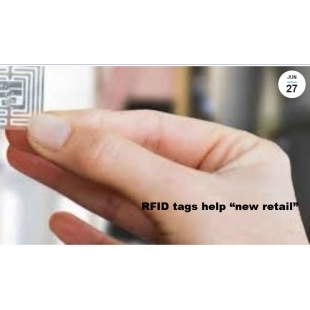
RFID tags help “new retail”
The application of RFID tags in the new retail field is very extensive and in-depth. First of all, the application of RFID technology in new retail is mainly concentrated in supply chain management, inventory management, in-store product management, customer relationship management and security management. For example, by attaching RFID electronic tags to goods, it is possible to quickly and batch identify materials and accurately obtain relevant information of products at any time, such as material types, suppliers, delivery time, validity period, inventory, etc. The application of this technology in inventory management can greatly improve the efficiency of goods entry and exit, picking, and inventory, improve the visibility of inventory to upstream suppliers, facilitate timely supply, and connect with the automatic replenishment system of in-store shelves to replenish in time and optimize inventory.
Secondly, RFID technology also plays an important role in store goods and anti-theft management. For example, the application of ultra-high frequency RFID can be extended to realize the function of fast finding goods through RSSI plus filtering function and help customers try on clothes intelligently by identifying the ID of electronic tags. In addition, it also supports inventory collection, rapid inventory, display management, interactive marketing, return allocation, smart shelves, smart anti-theft, internal control management, etc.
RFID technology also brings innovation to consumer experience management. For example, combined with dynamic display technology, it can show customers the goods in their hands and detailed information of the store they are in at any time, or push information that may be of interest to customers based on their purchase records and preferences, enhance customers’ sense of participation and experience, and increase the chance of cross-selling.
In short, the application of RFID technology in new retail not only improves the operating efficiency of enterprises and reduces costs, but also improves consumers’ shopping experience, bringing revolutionary changes to the retail industryRFID tags help “new retail”more -
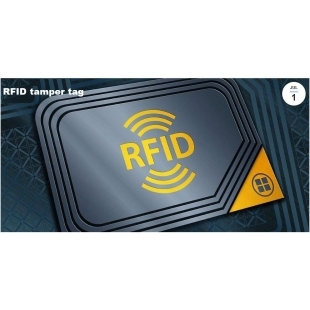
RFID tamper tag
RFID (Radio Frequency Identification) tamper-proof tags are specially designed tags to prevent or notify when a tampering attempt is detected. These tags usually contain an RFID chip and an antenna that emits a signal when the tag is removed from the object it is attached to or damaged. This technology is widely used in asset management, supply chain monitoring, anti-theft and security fields.
There are usually two working principles of tamper-proof tags:
Physical switch mechanism: When the tag is removed from the object it is attached to, a physical switch opens or closes, which changes the read signal of the RFID tag. The monitoring system can infer whether the tag has been illegally removed by reading the change in the signal.
Tamper-detection material: The tag may contain a special material that changes the circuit of the RFID chip once the tag is damaged, causing the signal to change.
In practical applications, RFID tamper-proof tags can be integrated with access control systems, alarm systems or other security systems to immediately sound an alarm when the tag is tampered. For example, using these tags on library books, high-value goods or sensitive data devices can immediately notify administrators when unauthorized removal attempts are made.By rooneyRFID tamper tagmore -
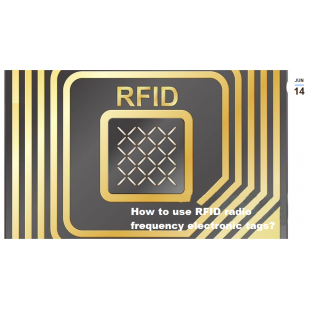
How to use RFID radio frequency electronic tags?
The use of RFID tags mainly involves the following steps:
Tag design: Design the size, shape and packaging of the tag according to the application requirements. Tags usually consist of a chip and an antenna, and may include a plastic sheet on which important information can be printed.
Tag activation: When the electronic tag enters the working area of the reader, it is excited by the radio frequency signal emitted by the reader and enters the working state. The activation energy of the tag refers to the energy range required to activate the electronic tag chip circuit.
Data reading and writing: RFID tags can be read and written by the reader. The reading and writing speed is usually required to be in the millisecond level, which can achieve multi-target recognition and motion recognition.
System integration: Connect the RFID system with the corresponding management information system to achieve accurate tracking and data management of items.
Application implementation: According to specific application scenarios, such as logistics management, product anti-counterfeiting, access control systems, etc., RFID technology is implemented to improve efficiency and accuracy.
Tag classification: According to the operating frequency and whether there is a power supply, RFID tags can be divided into passive, active, passive and active types. Choose the appropriate tag type according to the application requirements.
Antenna design: The antenna design of RFID tags is very important to ensure effective communication. The antenna needs to match the frequency of the reader and consider its performance in a specific application environment.
Security: Use a dedicated chip and serial number to ensure the uniqueness and difficulty of the tag, thereby improving the security of the system.
Durability: RFID tags are durable and free of mechanical failures, suitable for harsh environments, and have a long life.
Maintenance and monitoring: Regularly check the performance of the RFID system to ensure that the tags and readers are working properly, and adjust or update them as needed.
Through these steps, RFID radio frequency electronic tags can be effectively integrated into various applications to improve the efficiency of data collection, processing, and analysis.By rooneyHow to use RFID radio frequency electronic tags?more -

How does RFID smart warehousing achieve unattended entry and exit?
RFID tag and reader deployment:
RFID tag selection: Select RFID tags suitable for the storage environment, considering their reading distance, durability and data storage capacity.
RFID reader installation: Install RFID readers at key locations such as the warehouse entrance, exit and shelves to ensure coverage of the entire logistics path and storage area.
Warehouse entry process:
RFID tag scanning: When goods enter the warehouse, the RFID tag on each item is scanned and associated with the database in the system.
Location identification: The system determines the exact location of each item by reading the RFID tag and updates the inventory management system.
Outbound process:
Order matching: Based on the order information, the system queries the inventory management database to confirm the location and availability of the goods.
Automatic retrieval: The system guides automated equipment (such as AGV, robots, etc.) to the designated shelf, scans and collects items that need to be shipped out.
Access control: RFID technology is used to control the outbound access control, and only authorized items and equipment can pass through.
Automated handling and navigation:
Automated handling equipment: Using the location information provided by RFID tags, automated handling equipment can accurately locate and pick up goods.
Path planning and navigation: The system provides path planning for automated handling equipment based on the location information of RFID tags, avoiding collisions and effectively completing the task of handling items.
Real-time monitoring and management:
Real-time inventory update: Through continuous RFID tag reading, the location and quantity of items in the inventory management system are updated in real time.
Exception handling: The system can detect any abnormal situation (such as out-of-stock, error, etc.) and can automatically adjust or send alarms to relevant personnel for processing.
Through these measures, the RFID intelligent warehousing system can achieve efficient and accurate unattended in and out warehouse management, and improve the automation level and efficiency of warehousing operations.By rooneyHow does RFID smart warehousing achieve unattended entry and exit?more -
Transforming Events with RFID: Secure, Efficient, Smarter Solutions
Introduction
In today’s dynamic event environment, organizers are turning to RFID event technology to streamline operations, enhance security, and provide a seamless attendee experience. From music festivals to corporate conferences, RFID for events has moved beyond basic ticketing to offer integrated solutions for access control, data analytics, and personalized engagement. By replacing outdated manual processes with automated systems, RFID event solutions enable organizers to easily manage large crowds while prioritizing security and convenience.
How RFID Enhances Event Management?
RFID (Radio Frequency Identification) uses electromagnetic fields to wirelessly identify tags embedded in wristbands, cards, or RFID stickets. The technology is available in three frequencies, each designed for specific applications:
HF RFID and NFC: Access Control Accuracy
Range: Up to 3 feet (HF) or a few centimeters (NFC).
Best for: Event access control, cashless payments, and VIP area entry.
Benefits: NFC-enabled smartphones allow attendees to tap for instant interactions (e.g., to redeem offers), while HF ensures secure, tamper-resistant scanning in crowded areas.
UHF RFID: Scalability for large events
Range: 10-30 feet.
Best for: Real-time crowd analytics, attendee movement tracking, and inventory management.
Applications of RFID Event Solutions
1.Seamless Entry with RFID Stickets
Gone are the days of fumbling with paper stickets or QR codes. RFID stickets embedded in wristbands or cards allow attendees to easily pass through entry points with just a quick wave.
2.Smart Event Access Control
Secure areas such as backstage areas or VIP lounges utilize HF RFID readers to ensure only authorized personnel can enter. Real-time data is synced with a central dashboard, allowing organizers to monitor attendance and respond immediately to anomalies.
3.Cashless Payments and Personalized Engagement
NFC-enabled wristbands allow attendees to make cashless purchases at concession stands or interact with branded kiosks. For example, a tap of a wristband can unlock exclusive content or social media integrations, enhancing the attendee experience.
4.Anti-Counterfeiting and Security
Due to encrypted identifiers, RFID tags are nearly impossible to copy. High-profile events like major music festivals rely on this security to prevent ticket fraud and unauthorized access.
5.Data-Driven Insights
UHF RFID systems capture granular data, such as dwell time in a specific area or peak traffic times. After the event, this data helps organizers refine future logistics, marketing strategies, and attendee engagement strategies.
Why Leading Events Choose RFID Technology?
Speed: Reduce entry lines by more than 50% with instant scanning.
Security: Deter cloning and spoofing with universal standard certified chips like NXP MIFARE DESFire.
Versatility: Use the same RFID wristband for access, payment, and personalized benefits.
Scalability: Adapt the system to events of any size, from local conferences to global festivals.
RFID for Events: Key Considerations
Goal Alignment: Identify pain points (e.g., fraud, overcrowding) to customize solutions.
Tag durability: Choose waterproof wristbands or rugged badges for multi-day events.
Integration: Make sure the RFID system syncs with your existing event management platform.
Pilot testing: Start small (e.g., one entry gate) to perfect workflows before full deployment.
Conclusion
From frictionless entry to actionable insights, RFID event technology is redefining how modern events operate. By adopting RFID stickets, powerful access control systems, and data-driven tools, organizers can improve security, efficiency, and attendee satisfaction. As the industry evolves, RFID continues to set the standard for smarter, safer, and more engaging events.By heshiweiTransforming Events with RFID: Secure, Efficient, Smarter Solutionsmore -
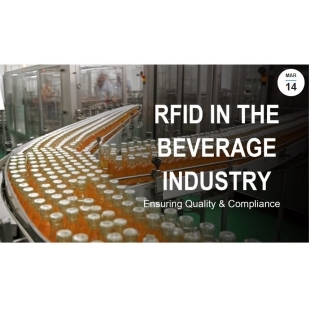
RFID Tags in Beverage Production and Distribution: Improving Quality and Compliance
Understanding RFID Tag Technology
RFID tags are smart labels embedded with a microchip and antenna that transmit data via radio waves. Unlike traditional barcodes, these tags support contactless, long-distance scanning – ideal for tracking beverages from manufacturing to retail shelves. Their ability to store detailed data such as batch numbers, expiration dates, and storage conditions makes them indispensable in modern beverage operations.
Optimizing Beverage Production with RFID Tags
A.Real-time Production Monitoring
RFID tags enable manufacturers to precisely oversee every stage of production. For example:
Quality Assurance: Sensors integrated into RFID systems monitor fill levels, cap seals, and labeling accuracy to minimize errors.
Environmental Control: Tags track temperature and humidity during fermentation or storage, which is critical for beverages such as craft beer or dairy products.
Maintenance Alerts: RFID-enabled devices can signal maintenance needs, preventing downtime.
B.Enhanced Safety Traceability
In the event of contamination or recall, RFID tags quickly identify the affected batches. This feature not only protects consumers, but also reduces financial and reputational risk for brands.
Streamlining Inventory and Warehousing
RFID in the beverage industry has revolutionized inventory management by providing the following features:
Automated inventory tracking: Warehouses can see the number of bottles in real time, reducing manual counting and human errors.
Dynamic replenishment: Alerts for low or overstock conditions optimize inventory levels.
Space utilization: RFID data helps organize storage layouts based on product demand and shelf life.
Ensure compliance across the supply chain
In beverage production, regulatory compliance is non-negotiable. RFID tags support compliance through:
Audit-ready documentation: Automatic logs of batch processing, quality checks, and shipping conditions simplify regulatory reporting.
Supply chain transparency: Tags verify that products are shipped through authorized channels, thereby deterring counterfeiting—a critical issue for premium beverages.
Condition monitoring: Real-time tracking of environmental factors during transportation ensures that products meet safety standards when delivered.
Key applications of RFID tags in beverage distribution
Ⅰ.Supply chain node visibility
From bottling plants to retailers, RFID tags create a seamless chain of custody. This visibility ensures adherence to food safety protocols and accelerates recalls when necessary.
Ⅱ.Anti-Counterfeiting Measures
High-value beverages, such as aged spirits or specialty wines, leverage encrypted RFID tags to authenticate products and protect brand integrity.
Ⅲ.Retail Integration
Retailers use RFID data to manage shelf inventory, reduce out-of-stocks, and increase customer satisfaction.
Conclusion: RFID Tags Are a Catalyst for Industry Progress
Adoption of RFID in the beverage industry is no longer a nice-to-have, but a strategic imperative. By embedding RFID tags into workflows, manufacturers and distributors can achieve unparalleled operational efficiencies, adhere to strict quality standards, and future-proof their compliance strategies. As consumer expectations and regulations evolve, RFID technology will continue to play a critical role in delivering safe, high-quality beverages to global markets.By heshiweiRFID Tags in Beverage Production and Distribution: Improving Quality and Compliancemore -
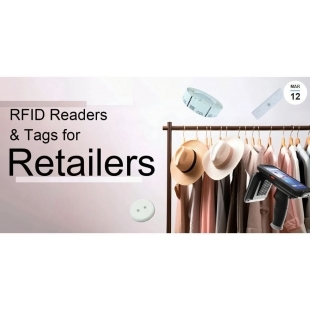
How do RFID tags and readers improve retail efficiency and reduce costs?
From inventory management to customer experience, RFID systems enable RFID retailers to streamline operations and stay competitive.
The backbone of smart retail enterprises
RFID tags use radio waves to communicate with readers. In retail, these tags are attached to products or packaging to enable seamless tracking from warehouse to store shelves. Types and applications of RFID tags:
Passive RFID tags
Applications: Ideal for RFID apparel tags, footwear, and high-volume items due to their cost-effectiveness.
Range: Operates within a few meters, suitable for item-level tracking.
Power: Relies on the energy of the RFID reader, no batteries are required.
Ultra-high frequency (UHF) RFID tags
Benefits: Provides extended read range (about 10 meters) and fast data capture, making it ideal for large-scale inventory management.
Efficiency: Improves inventory visibility, reduces shrinkage, and speeds up the checkout process.
Popular RFID tag variations include RFID apparel tags for apparel retailers, jewelry tags, and customizable blank tags for various product lines.
RFID Readers: Powering Real-Time Data Capture
RFID readers are essential for extracting and processing data from tags.
Handheld RFID Readers
Portability: These devices are lightweight and mobile, allowing workers to conduct inventory checks, locate items, and verify prices anywhere.
Fixed RFID Readers
Mounting: Installed at strategic locations such as entrances, exits, or smart shelves to automatically track inventory.
Use Cases: Monitor product movement in real time, prevent theft, and streamline supply chain logistics.
Key features to consider when selecting an RFID reader include read range, antenna design, and compatibility with cloud-based analytics platforms.
RFID in Retail: Transforming Operations
Ⅰ.Inventory Accuracy and Efficiency
RFID eliminates manual inventory counting errors by providing real-time visibility into inventory levels. For example, RFID apparel tags enable retailers to track thousands of garments in minutes, reducing out-of-stocks and overstocking.
Ⅱ.Enhanced Customer Experience
Faster checkouts, accurate product availability updates, and personalized recommendations are now possible. Imagine shoppers using a smart mirror that recommends matching accessories via an embedded RFID reader—a trend that is gaining traction in fashion retail.
Ⅲ.Loss Prevention
At the exit, UHF tags paired with fixed readers can deter theft by triggering unpaid item alerts.
Ⅳ.Supply Chain Optimization
From the warehouse to the storefront, RFID ensures end-to-end traceability, minimizes delays, and improves demand forecasting.
Why RFID is Critical for Retailers
As consumer expectations evolve, RFID retailers must use technology that provides flexibility and precision. By investing in RFID apparel tags, advanced RFID readers, and intelligent software, retailers can achieve unprecedented operational efficiencies, reduce costs, and deliver memorable shopping experiences.By heshiweiHow do RFID tags and readers improve retail efficiency and reduce costs?more -
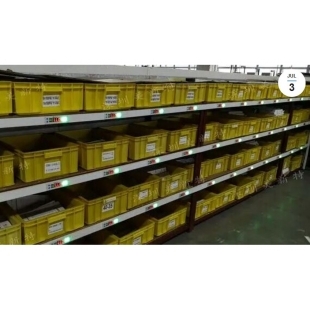
Electronic label picking system
Electronic Tag Picking System is an important technology in smart logistics. It is mainly used in the picking process of warehousing logistics and can significantly improve logistics efficiency and accuracy. The system usually includes several key parts such as electronic tags, reading equipment, control systems and picking equipment.
An electronic label is a label with electronically stored information, usually attached to goods or shelves. These tags store the type, location and other key information of the cargo. Under the command of the warehouse management system (WMS), the reading device (such as an RFID reader) will scan the electronic tag and transmit the information to the control system. The control system calculates the shortest or optimal picking path according to the instructions of the application program, and then guides the picking equipment to the designated location to pick the goods.
Picking equipment can be in various forms, such as handheld devices for manual picking, or automated picking robots, such as the “Dilang” robot. This kind of robot can automatically go to the location of the goods based on the information of the electronic tag, pick the goods out, and then transport the goods to the correct exit or packaging area through automated conveyor belts and sorting systems.
The advantages of electronic label picking systems are:
Improve efficiency: The system can automatically plan the optimal picking path, reducing the time spent manually searching for goods, especially for warehouses with a wide range of categories and dense shelves.
Improved accuracy: Through accurate reading of electronic tags, the possibility of human picking errors is reduced and the accuracy of the overall operation is improved.
Flexible adaptability: The system can be adjusted according to different work requirements and cargo types, and is suitable for warehouses of various sizes and complex logistics environments.
Reduce labor costs: Automated picking processes can reduce the investment in human resources, especially during peak periods, and can effectively alleviate the problem of labor shortages.
Real-time monitoring and data feedback: The electronic label system can monitor the picking process in real time, provide a large amount of data support for logistics management, and help companies optimize inventory management and logistics planning.
In my country, with the continuous development of smart logistics, electronic label picking systems have been widely used in the field of warehousing and logistics. Especially in modern logistics centers such as JD Logistics Asia No. 1 Qingdao Intelligent Industrial Park, such systems have become one of the key factors to improve express logistics speed and processing capabilities, enabling logistics services to achieve faster delivery speeds and better Meet consumers’ demands for high efficiency and high quality logistics services. Data from the State Post Bureau shows that my country’s logistics market has remained the largest in the world for many years in a row, and its express delivery business has also ranked first in the world for many years in a row. This is inseparable from the huge contribution of smart logistics technology including electronic label picking systems.By rooneyElectronic label picking systemmore -
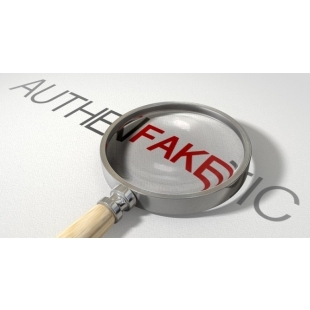
Safeguarding Authenticity: Unveiling the Role of RFID Technology in Anti-Counterfeiting
Discover how RFID technology, NFC tags, and NFC-enabled smartphones are reshaping the fight against counterfeiting. Learn how these innovations empower consumers, restore trust, and ensure product authenticity in an increasingly complex marketplace.Safeguarding Authenticity: Unveiling the Role of RFID Technology in Anti-Counterfeitingmore


